
Mikuyu Tanzania works alongside children, teachers, entrepreneurs and farmers across Babati to improve educational opportunities for children and enhance the income generating skills of adults. They work with partners who collaborate with beneficiaries and develop strategies to overcome poverty.
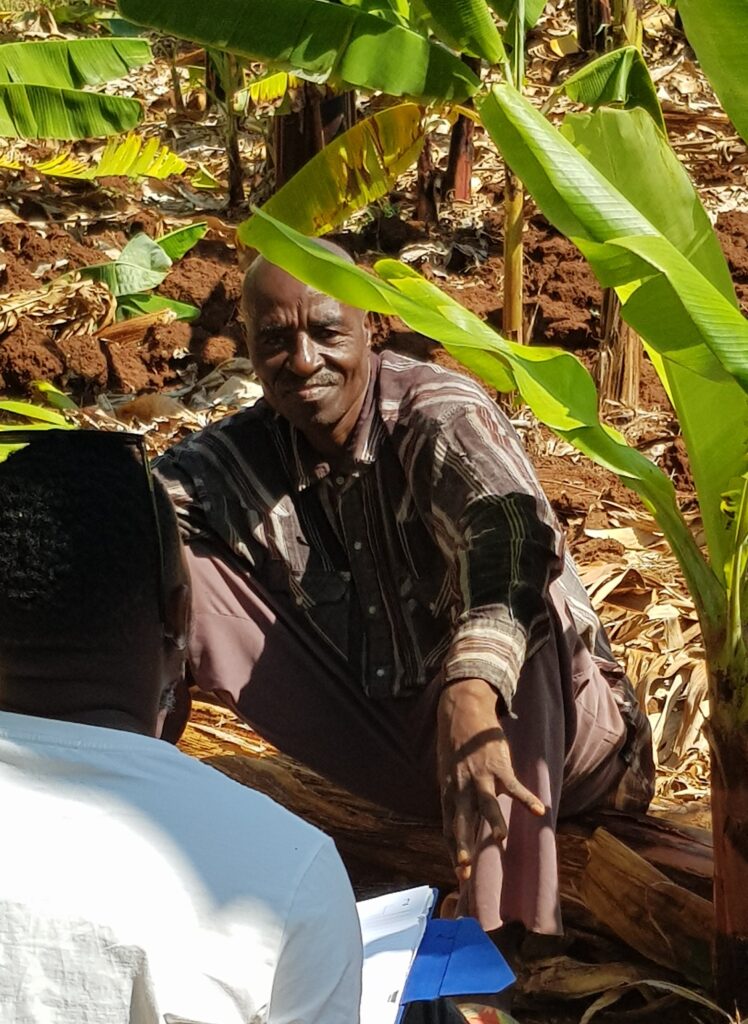
As the climate changes, farmers in Babati are finding that their reliable crops are not so reliable which is causing challenges to income security, household diet and standards of living. Working in partnership with Babati Agricultural Department, Livingstone Tanzania Trust are working with householders to plant Malinde bananas on their land. Malinde bananas are more drought tolerant and because banana trees are propagated from suckers or shorts that grow from the main stem of the plant, one tree can in time become 2-3 trees, so 10 trees can soon become 30 trees.
The Trust is providing funding to Mikuyu Tanzania to work with 75 farmers to each plant 10 trees, and provide follow up and training. The bananas can be eaten raw or cooked and can provide the household with a low maintenance food source and in time with a source of income.
The initial phase of the project completed in December 2024 after which the charity asked for more time to assess the outcomes before moving to the second phase. They reported in September 2025. 86% of the supported farmers had grown trees with a survival rate of 59% on average, each tree having two suckers each of which able to grow into a new fruit yielding tree. The farmers did not anticipate the bananas replacing maize as their key crop but they agreed that selling the surplus crop would be a useful supplement to add to household income. The ongoing risks relate to water availability and market access. The farmers requested more training and mentoring. The delayed second part of the programme addresses these and other matters raised by the beneficiaries. It is projected that the yield from the project will be four times greater in year 3 than achieved in the first year.